In 1602, English explorer Bartholomew Gosnold landed on Cape Cod and initially named the area "Shoal Hope" because of the abundant codfish he found there. He later renamed it "Cape Cod," a name that has remained in use ever since.
Project #13 - Provincetown
Fun Nuggets:
Some historians believe that Vikings may have reached or briefly settled in the area around 1004, although there is little documentary or archaeological evidence to confirm this. If they did visit the region, the site may have been used to bury the wounded or the dead.
The original inhabitants of Cape Cod were the Nauset people. They spoke the Massachusetts language; a New England Algonquian language shared with several neighboring Indigenous communities.
After battling rough seas, the Pilgrims aboard the Mayflower dropped anchor in what is now Provincetown Harbor in November 1620. While anchored there, the adult male passengers drafted and signed the Mayflower Compact. The document was not a contract between the settlers and the Council for New England; rather, it was an agreement among the settlers themselves to establish a civil government and work together for the good of the colony. In essence, it served as a social contract in which the colonists agreed to follow laws and regulations enacted for the colony's survival and welfare.
Incorporated in 1727, Provincetown was originally proposed to be named "Herringtown" by its residents. The colonial government, however, rejected the name and instead designated it "Provincetown," reflecting the area's status as land reserved for the Province of Massachusetts. Prior to its incorporation as a separate township, the community was known as the Precinct of Cape Cod.
Provincetown has a dark whaling history, during which thousands of whales were harvested, including sperm, right, and humpback whales. These whales were hunted primarily for their oil and baleen, which were valuable commodities in the 18th and 19th centuries. Today, Provincetown is better known for its commitment to marine conservation, whale watching, scientific research, and animal welfare efforts aimed at protecting the very species that were once heavily exploited.
The waters of Cape Cod have long been linked to the Golden Age of piracy. Provincetown Harbor was rumored to be a drop-off point for pirate treasure because of its isolated shores. Although much of the story remains legend, you do not have to look far to find signs that the spirit of the pirates still inhabits these shores.
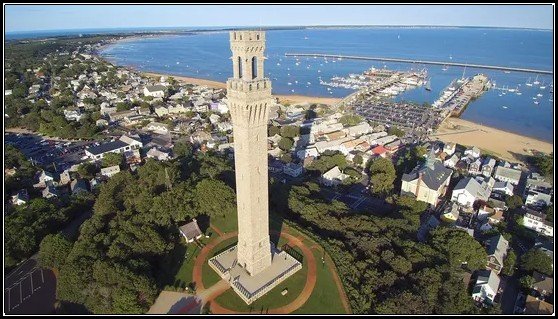
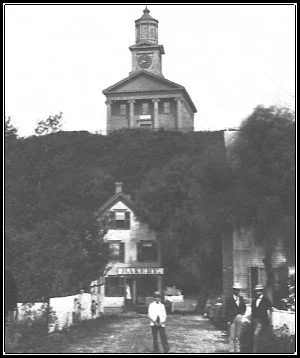
The Pilgrim Monument is the tallest all-granite structure in the United States, rising 252 feet above Provincetown. Built between 1907 and 1910, it commemorates the Pilgrims' arrival in 1620 and the signing of the Mayflower Compact. The monument stands on the site of the town's original Town Hall, which was destroyed by fire in 1877.