Project #14 - Fort Worth Capital
This was one of the rowdiest towns in the American West, with a long history shaped by cowboys, cattle drives, and commerce. From the era of the Chisholm Trail to the notorious Hell's Half Acre district and its frequent gunfights, the town earned a reputation as a rough-and-tumble frontier community.
Early Texas history: On March 2, 1836, Texas declared its independence from Mexico and established the Republic of Texas. Just days later, on March 6, the Battle of the Alamo took place, when the Mexican Army, numbering over 1,500 troops, attacked the Alamo Mission defended by roughly 200 Texan forces. The Texan defenders were defeated and killed; however, some civilians—primarily women and children—were spared and allowed to leave. Despite this defeat, six weeks later the Texan Army decisively defeated Mexican forces at the Battle of San Jacinto, effectively securing Texas’ independence. In 1845, Texas was annexed by the United States and became the 28th state.
In the 1840s, as Texas was still a young state, lawmakers were actively organizing counties and selecting county seats. Competition among settlements was intense, since becoming a county seat brought economic growth and political influence. Birdville was chosen as the first county seat in the region.
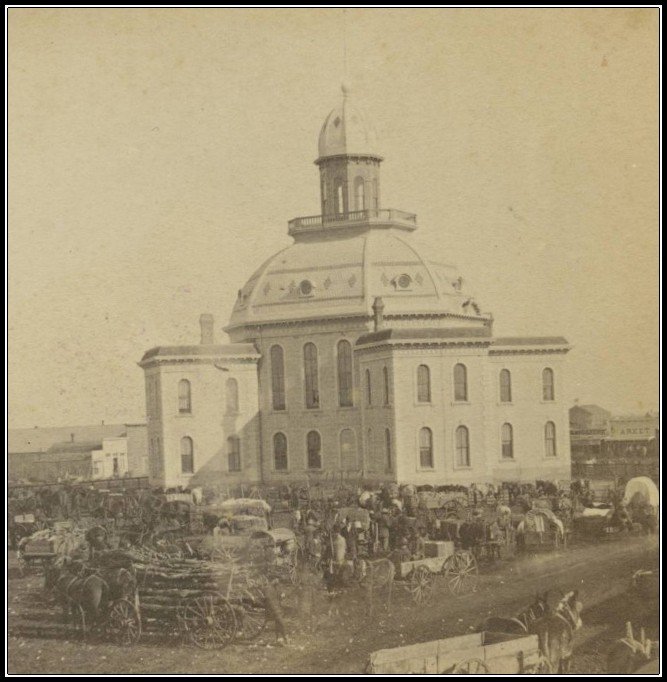
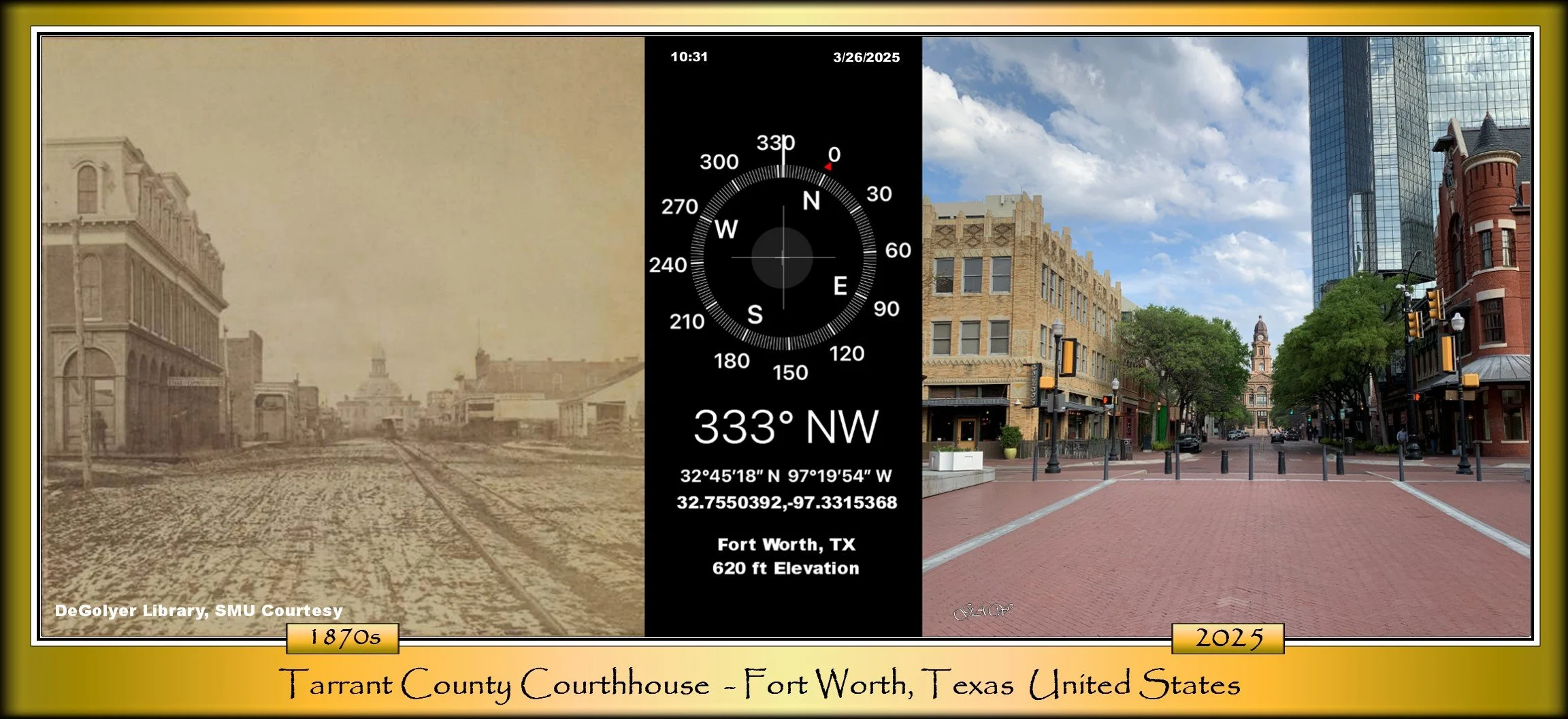
In 1856, after continued disputes over county organization, the county seat was moved to what would become Fort Worth in Tarrant County. A courthouse was planned and construction began, but progress was delayed by the Civil War. The building saw only limited use before it was destroyed by fire in 1876, resulting in the loss of many county records.
A new courthouse was later constructed and completed in 1895. It was among the early examples of a steel-framed courthouse in Texas and cost approximately $408,840. Despite being completed within budget, the project drew significant public criticism, and in the following election, the entire board of county commissioners was voted out of office.
After the Civil War, thousands of stray longhorn cattle were roaming across Texas. This led to the rise of the cattle drive era in the late 1860s, as ranchers gathered herds and drove them north to railheads and markets. Several major trails developed during this period, including the Chisholm Trail, one of the most heavily used routes. Fort Worth became a major staging point for cattle drives and an important hub in the regional cattle industry.
This situation created employment for hundreds of young cowboys and former Confederate soldiers seeking work after the Civil War. During the cattle drive era of the 1860s, before railroads reached many parts of Texas, these men found jobs driving cattle along the trails or working in the supporting industries that grew up around the cattle trade.
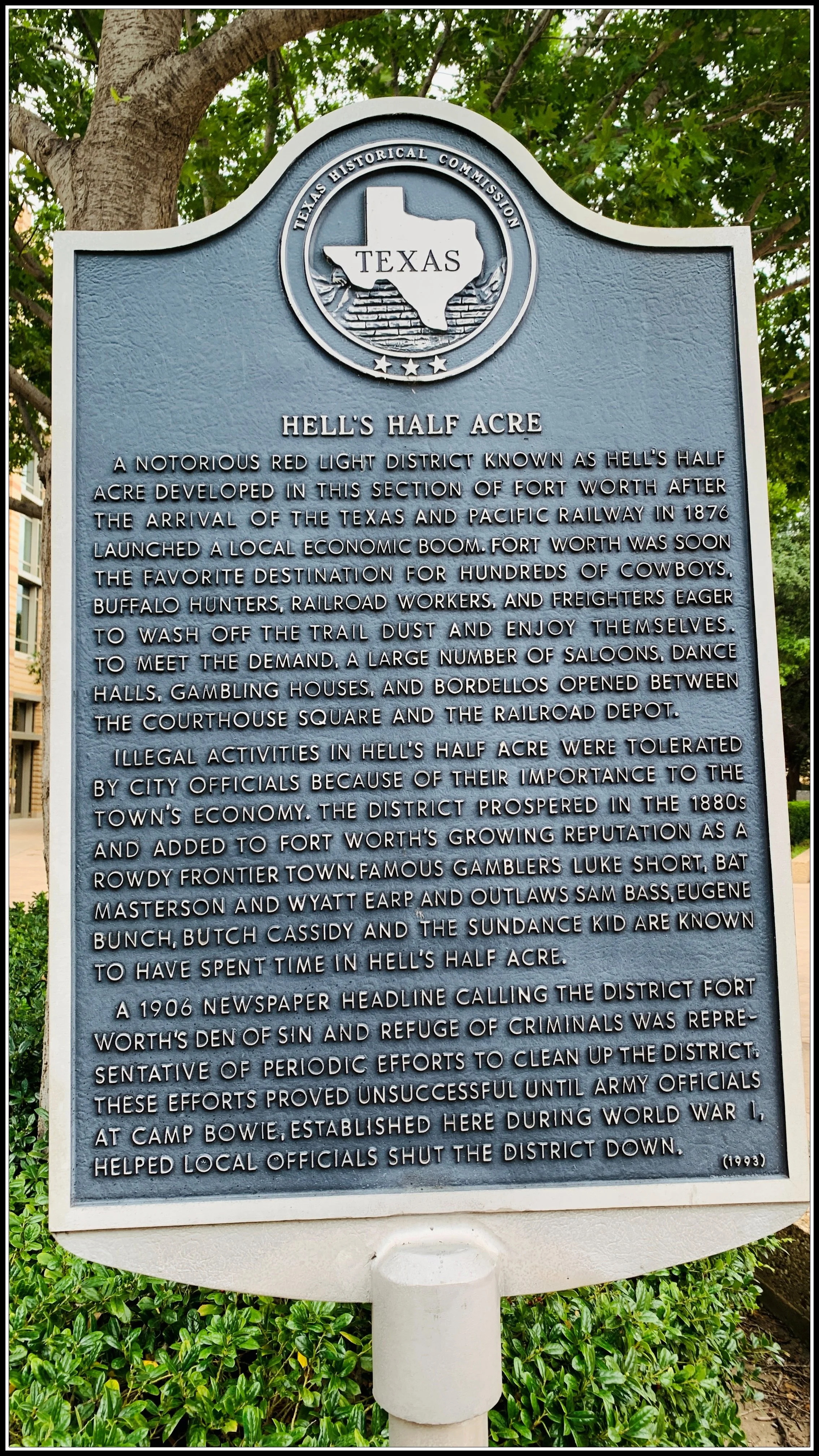
Hell's Half Acre was one of the supporting business districts that developed during the cattle drive era. It contained numerous boarding houses, gambling halls, saloons, and brothels, and was located primarily in the southeastern part of Fort Worth. The area became known for its rough reputation as a lively and often lawless red-light district that catered to cattle drivers, travelers, and workers passing through the city.
The influx of people also brought thieves and violent outlaws, leading to increased efforts by law enforcement to curb widespread knife fights, muggings, and shootings. U.S. marshals and local officers worked to impose order in the area, although enforcement often tolerated gambling and other vice-related businesses, since they contributed significantly to the local economy.
Fun Nuggets:
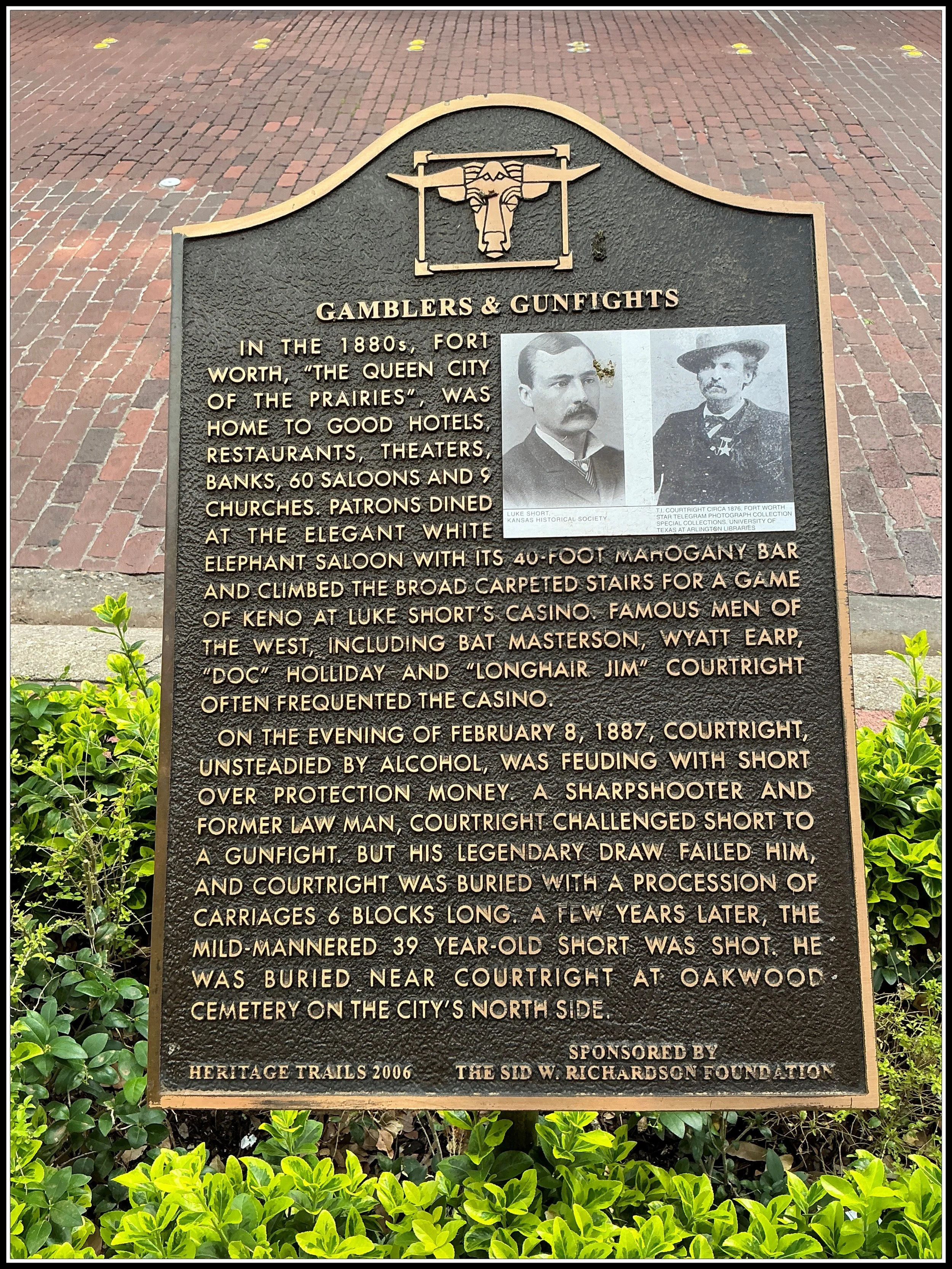
Jim Courtright, often known as “Longhair Jim,” was a former Federal and city marshal who served in Fort Worth. He became known for his aggressive and sometimes controversial approach to law enforcement. Courtright worked to suppress crime in the city’s vice districts, but his career was also marked by allegations of corruption and intimidation. His reputation as a fast-drawing gunman contributed to his notoriety, though his enforcement style was often as much about authority and fear as formal policing.
In 1887, Luke Short—an infamous professional gambler and co-owner of the White Elephant Saloon—became involved in a dispute with Jim Courtright in Fort Worth. The conflict centered on Courtright’s alleged attempts to collect “protection” money. This led to a confrontation outside the saloon, where Courtright and Short exchanged gunfire. Short fired first, striking Courtright in the thumb, followed by a fatal shot to the chest that killed him.
This was just one of many disputes in Fort Worth during the frontier era that ended in gunfights or stabbings. The city’s saloons and gambling halls attracted a wide range of notable Western figures, including Butch Cassidy, The Sundance Kid, Wyatt Earp, Doc Holliday, and Bat Masterson, who were associated—either directly or through visits—with similar frontier towns and establishments.
The decline of Hell's Half Acre—sometimes loosely referred to as part of the city’s “third ward”—came in the early 20th century as public pressure mounted against its vice activities. By the 1910s, residents of Fort Worth increasingly criticized the district for its size and reputation.
During World War I, the establishment of Camp Bowie in 1917 brought a major military presence to the area. Authorities sought to reduce vice activity near the camp and limit soldiers’ access to gambling, alcohol, and brothels. Combined with civic reform efforts, this helped accelerate the closure and dispersal of Hell’s Half Acre.
The last remaining structure associated with Hell's Half Acre is often identified as the building now housing Del Frisco's Double Eagle Steakhouse, though much of the original district has been rebuilt or significantly altered over time. The area that once made up the Acre has since been redeveloped into downtown Fort Worth, including nearby civic spaces such as the Fort Worth Water Gardens, where a historical marker acknowledges the district’s past.