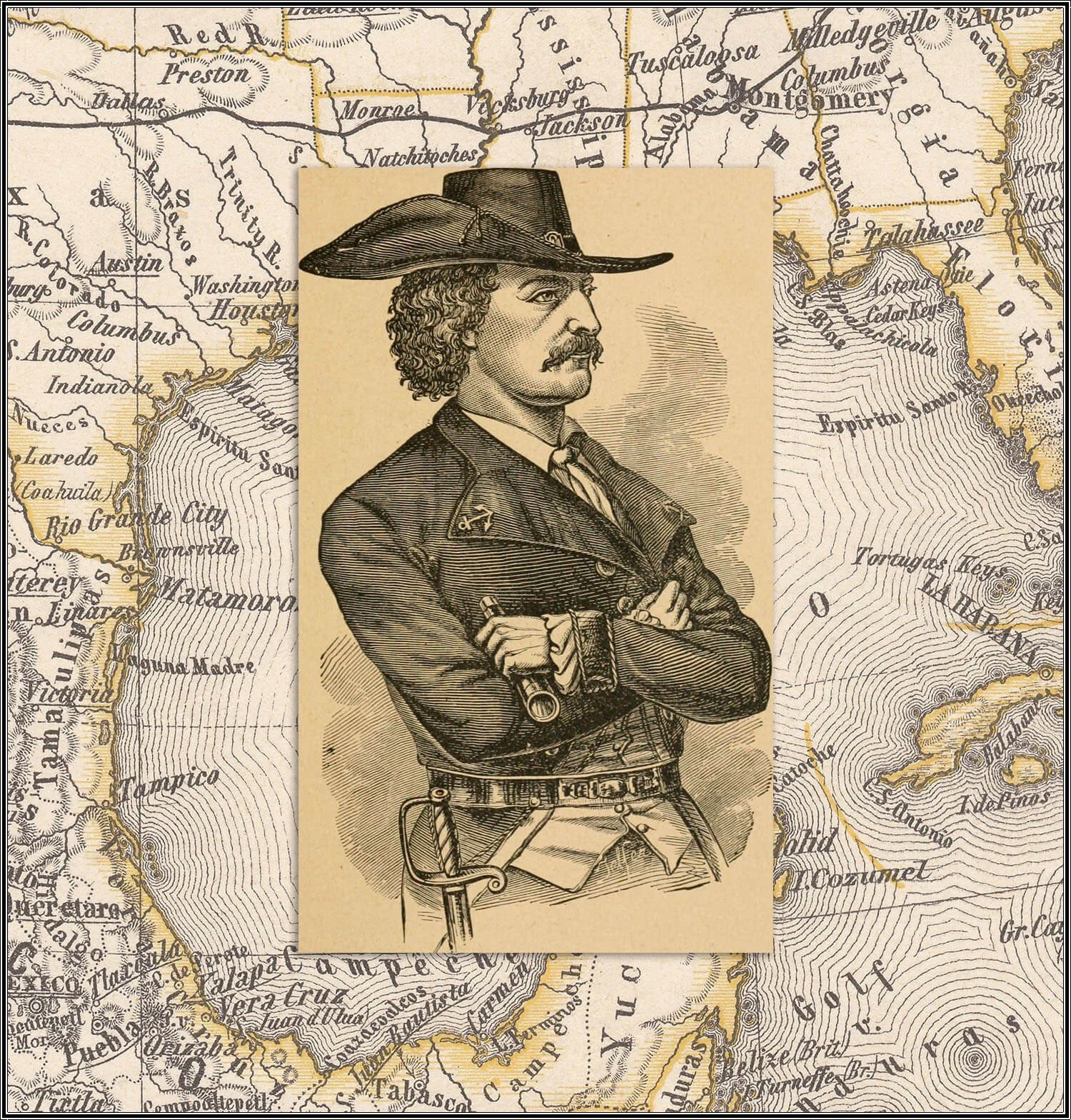
Project #15 - Lafitte’s “Pirate Bar”
Jean Lafitte and his brother Pierre Lafitte operated in the Gulf of Mexico as privateers and smugglers in the early 1800s. They often used legitimate businesses, including blacksmith shops and other trade fronts, to conceal their smuggling activities.
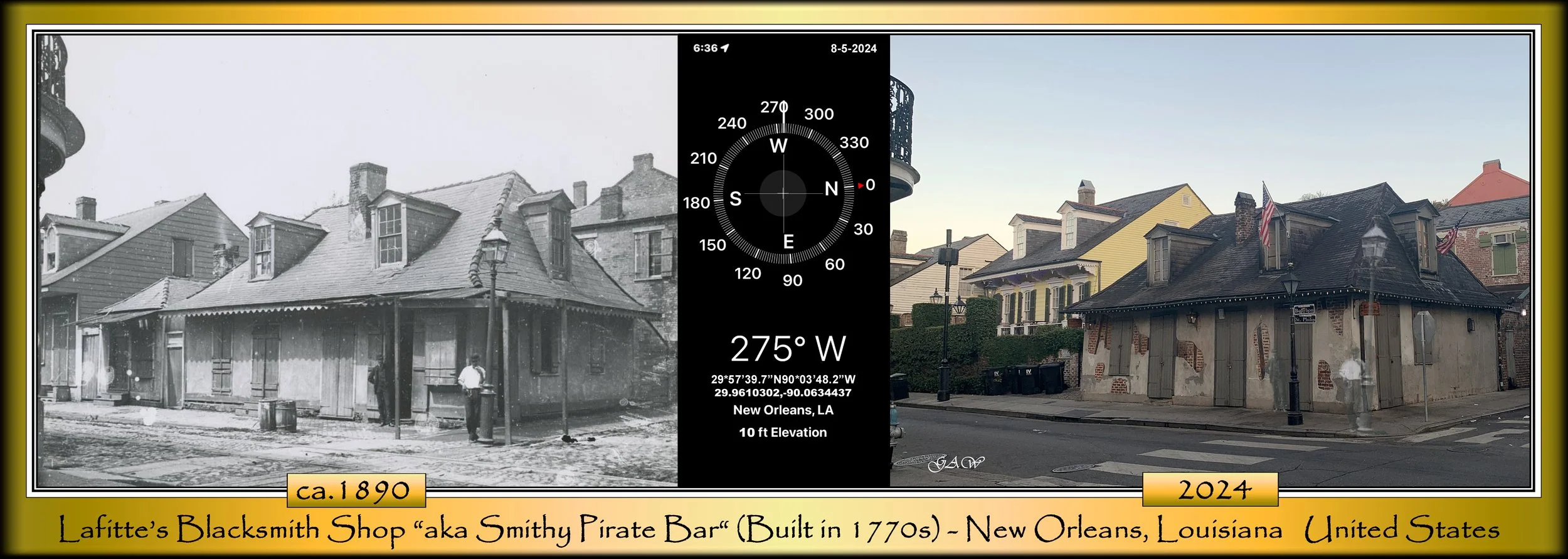
Built sometime in the early 18th century—traditionally dated between 1722 and 1732 and likely originally used as a residence near the corner of Bourbon Street and Philip Street in New Orleans—early records of the structure are sparse and often based on limited documentation.
By the early 1800s, the property became associated with Jean Lafitte and his network. Around this time, it was reportedly used as a warehouse and blacksmith shop connected to smuggling operations in the Gulf of Mexico. Goods taken from intercepted ships were allegedly stored and traded there. Lafitte’s brother, Pierre Lafitte, is often associated with maritime trade and blacksmithing skills, which helped provide a legitimate cover for their activities.
The building is often described as highly haunted, with legends tied to its violent pirate-era past. It is sometimes claimed to be one of the most haunted structures in the French Quarter. Some visitors say they have seen the ghost of Jean Lafitte walking across the creaking floorboards, though such accounts are anecdotal and part of local folklore. Others jokingly attribute unusual experiences to the establishment’s signature drinks, including its well-known “voodoo daiquiri.”
Pirates and privateers are similar in that both engaged in attacking and plundering ships at sea, but they differed in legal status. Privateers operated under government authorization through a document called a “Letter of Marque,” which granted them permission to attack enemy vessels during wartime and allowed them to keep a portion of the captured goods as payment. In contrast, pirates operated outside the law without any official authorization and kept all seized goods for themselves.
The history of New Orleans is shaped by the distinction between Indigenous settlement, colonial rule, and eventual American statehood. To understand its development requires tracing the region’s complex history involving Native American nations, European colonization, and U.S. expansion.
The area was originally inhabited by Indigenous peoples, including the Choctaw, who referred to the region as “Bulbancha,” often translated as “land of many tongues,” reflecting its linguistic and cultural diversity.
The city was officially founded in 1718 by French colonists under Jean-Baptiste Le Moyne de Bienville, more than 50 years before the United States declared independence. Later, following the Louisiana Purchase, the territory became part of the United States, and Louisiana was admitted to the Union in 1812 as the 18th state.
Fun Nuggets:
Little is definitively known about the early life of Jean Lafitte, though he is commonly believed to have been born around 1780, and his surname is often spelled “Lafitte.” He was a French privateer and smuggler operating in the early 19th century, a time when shifting colonial powers and evolving maritime law blurred the lines between legitimate trade and piracy.
Lafitte and his associates eventually based their operations in the Barataria Bay region, a remote area south of New Orleans. Its isolated location provided strategic advantages for smuggling, allowing ships to evade U.S. naval patrols while facilitating the movement of illicit goods into and out of the Gulf of Mexico.
Many of these accounts are a mix of documented history and folklore that has developed over time. Like many frontier and port cities, stories of pirates and privateers often contain a blend of fact and legend, with a small core of historical truth expanded through storytelling. Pirates and smugglers did, at times, operate outside formal law and followed their own codes aboard ship.
Today, these stories remain an important part of the cultural memory of the French Quarter, although pirates can still be found in its dark alleys of the town if you’re not careful.