Project #6 - Quaker Oats
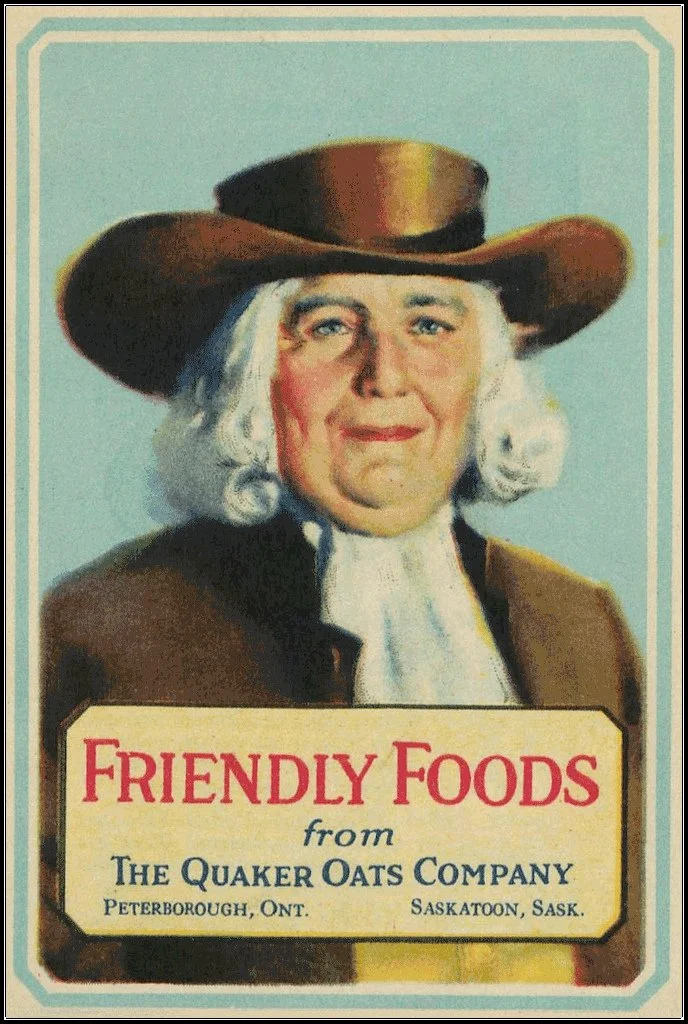
The Quaker Oats brand was developed in the late 19th century and became one of the earliest registered trademarks for a breakfast cereal. Its “figure of a man in Quaker garb” was chosen to represent integrity and purity.
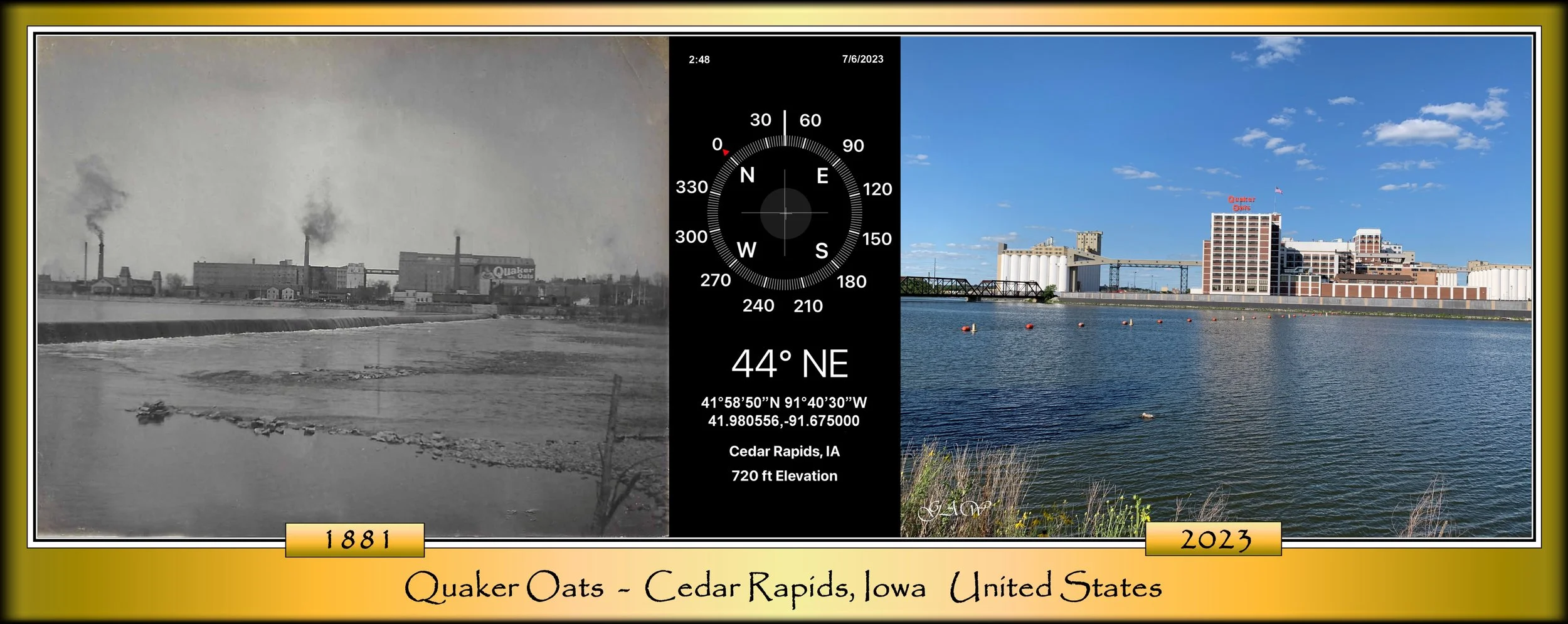
Original founder Ferdinand Schumacher started oat mills in the 1850s and was often called the “Oatmeal King.” German Mills was located in Akron, Ohio. Robert Stuart was involved in early milling enterprises in North America, including operations in Canada (North Star Mills in Ontario), which is historically associated with early oat milling. These enterprises later contributed to the formation of the Quaker Oats Company, which was formally established in 1877.
In the early days of the oat milling industry, there were many different approaches to recipes and marketing, which led to intense competition, fragmented ownership, and numerous smaller companies; many were later consolidated or failed. The Quaker Oats Company as it is known today was formed through industry consolidation in 1901, with Chicago later becoming an important corporate base.
In 1946, before the dangers of radiation were fully understood, research was conducted on children in at least two different college institutions. Experiments were carried out to determine how much of certain minerals were metabolized. The minerals tested included radioactive calcium and iron. A lawsuit was settled in 1997, and $1.85 million was paid to the participants.
Quaker Oats became known as an early leader in the mass production of affordable packaged breakfast foods. Its branding emphasized purity and simplicity, reflecting broader consumer trends toward standardized and convenient food products in the late 19th and early 20th centuries.
In 1902, oatmeal boxes came with coupons redeemable for deeds to tiny lots in Milford, Connecticut. The lots were sometimes as small as 10 by 10 feet. This was a marketing strategy, and because the land was largely unbuildable, the city eventually carried out a general foreclosure.
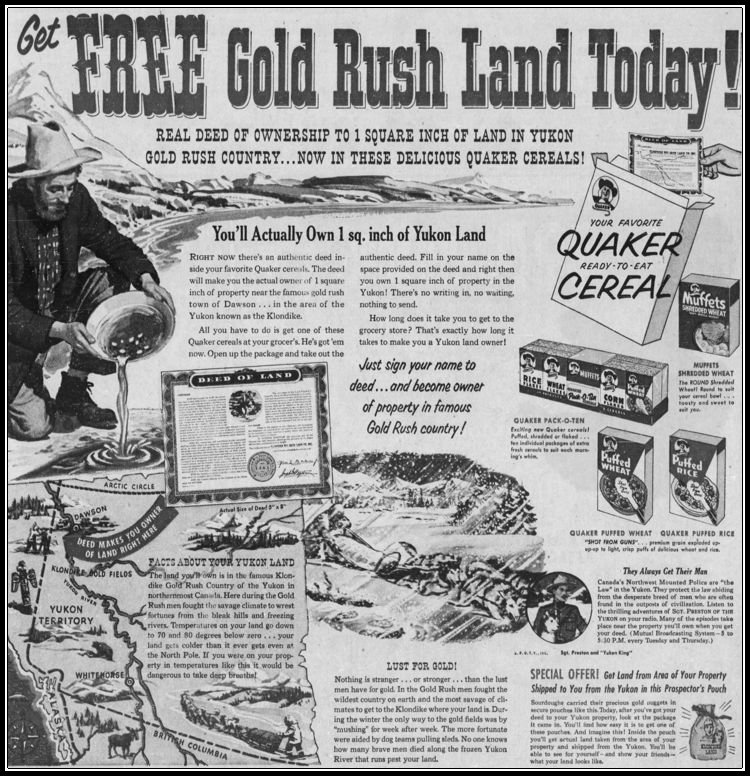
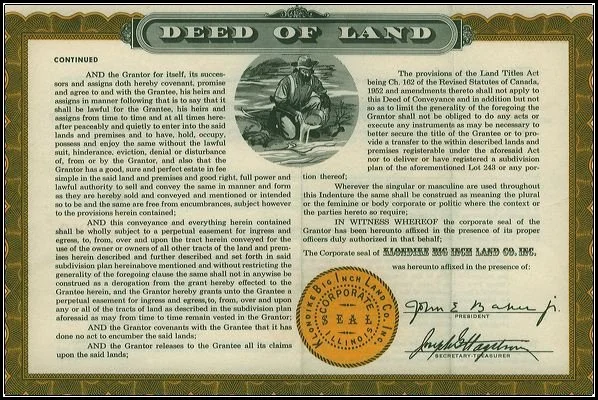
Again in 1955, Quaker Puffed Rice ran another land-deed promotion, this time offering one-square-inch parcels in the Klondike. One man collected over 10,000 deeds and attempted to combine them into a single quarter-acre parcel. The company received thousands of letters from people who hoped to mine gold from their one-square-inch plots; however, mining rights were not included in the deeds. Ultimately, taxes on the Yukon land were never paid, and in 1965 the Canadian government reclaimed it.
Fun Nuggets: