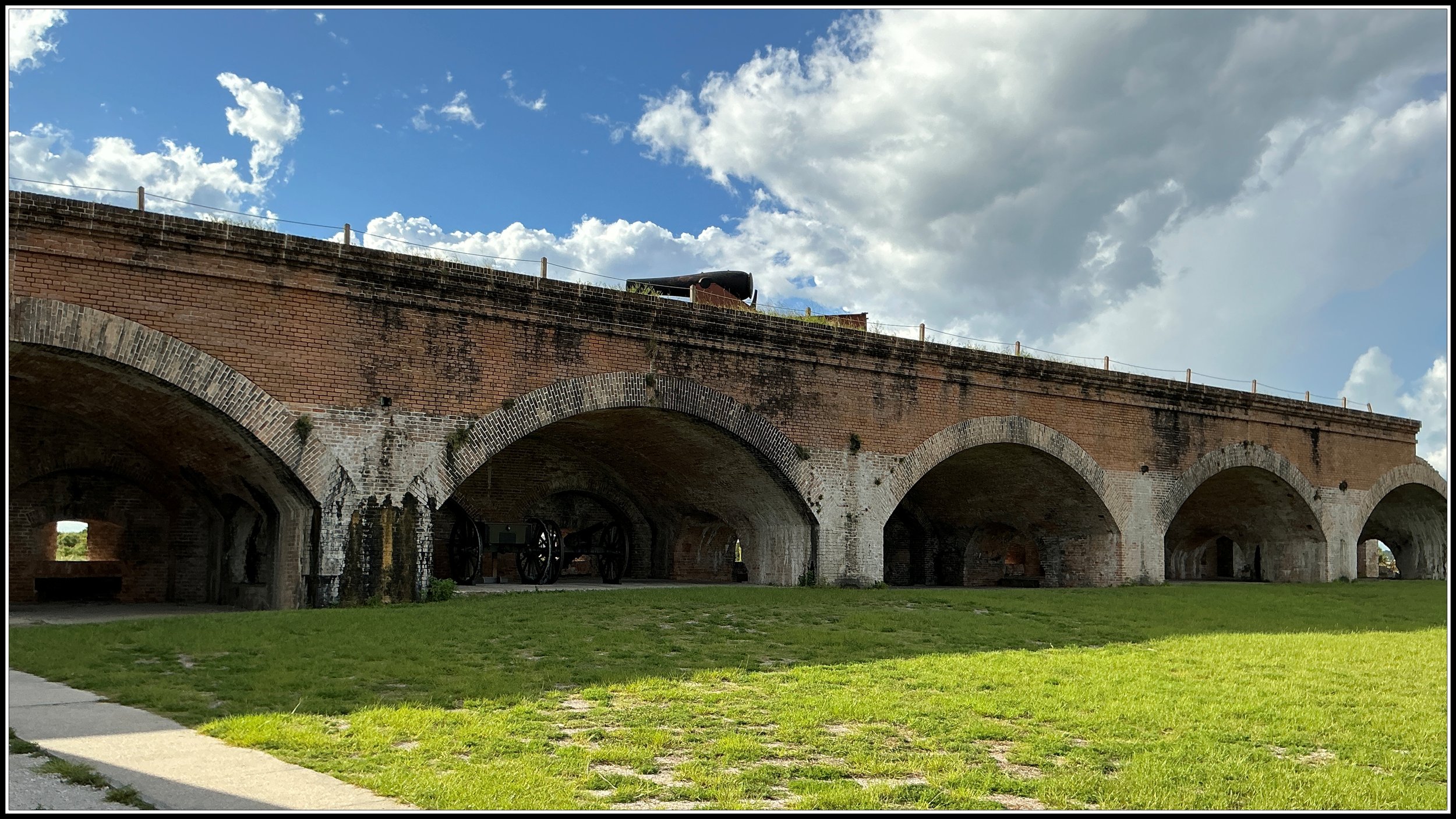
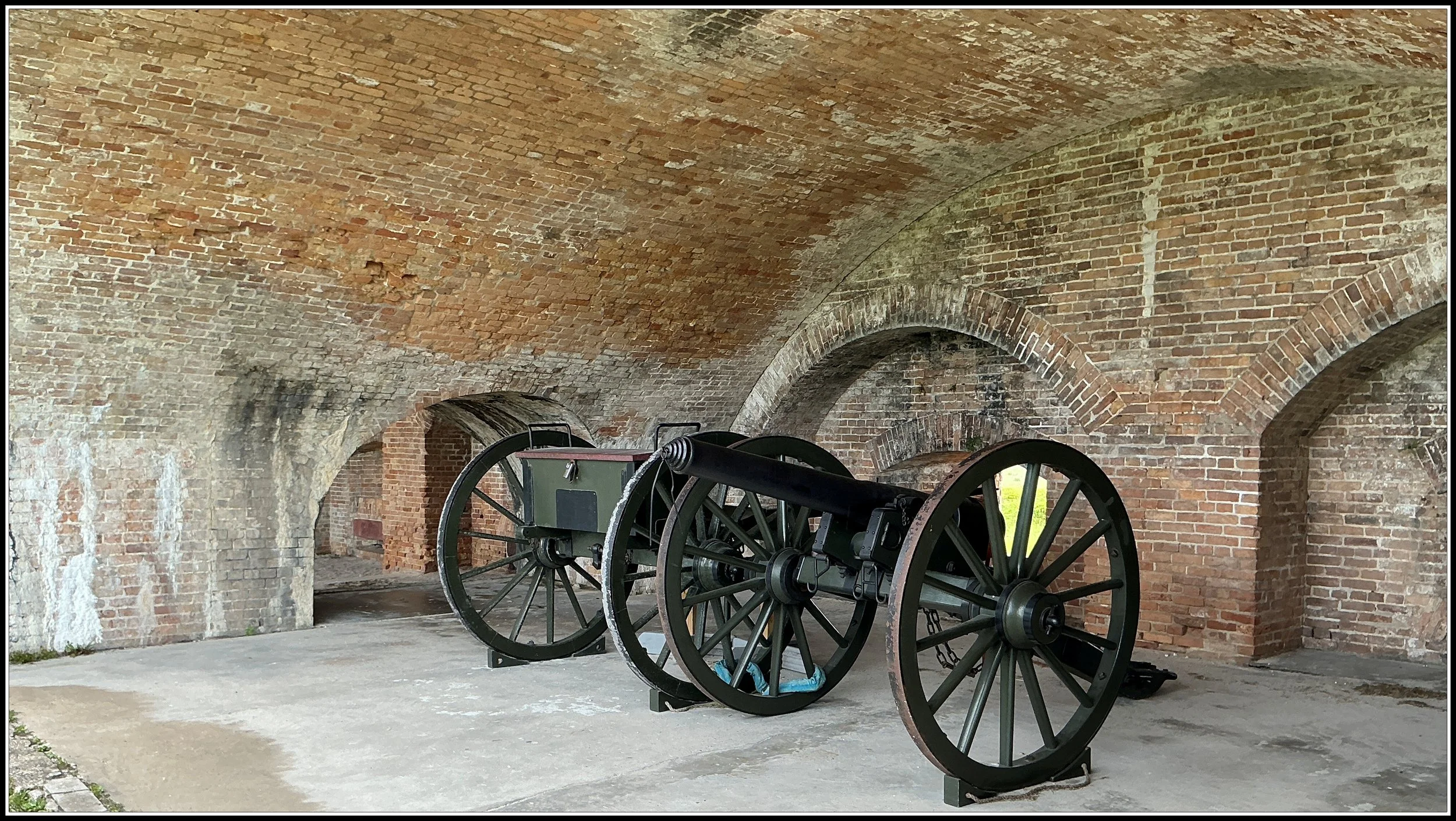
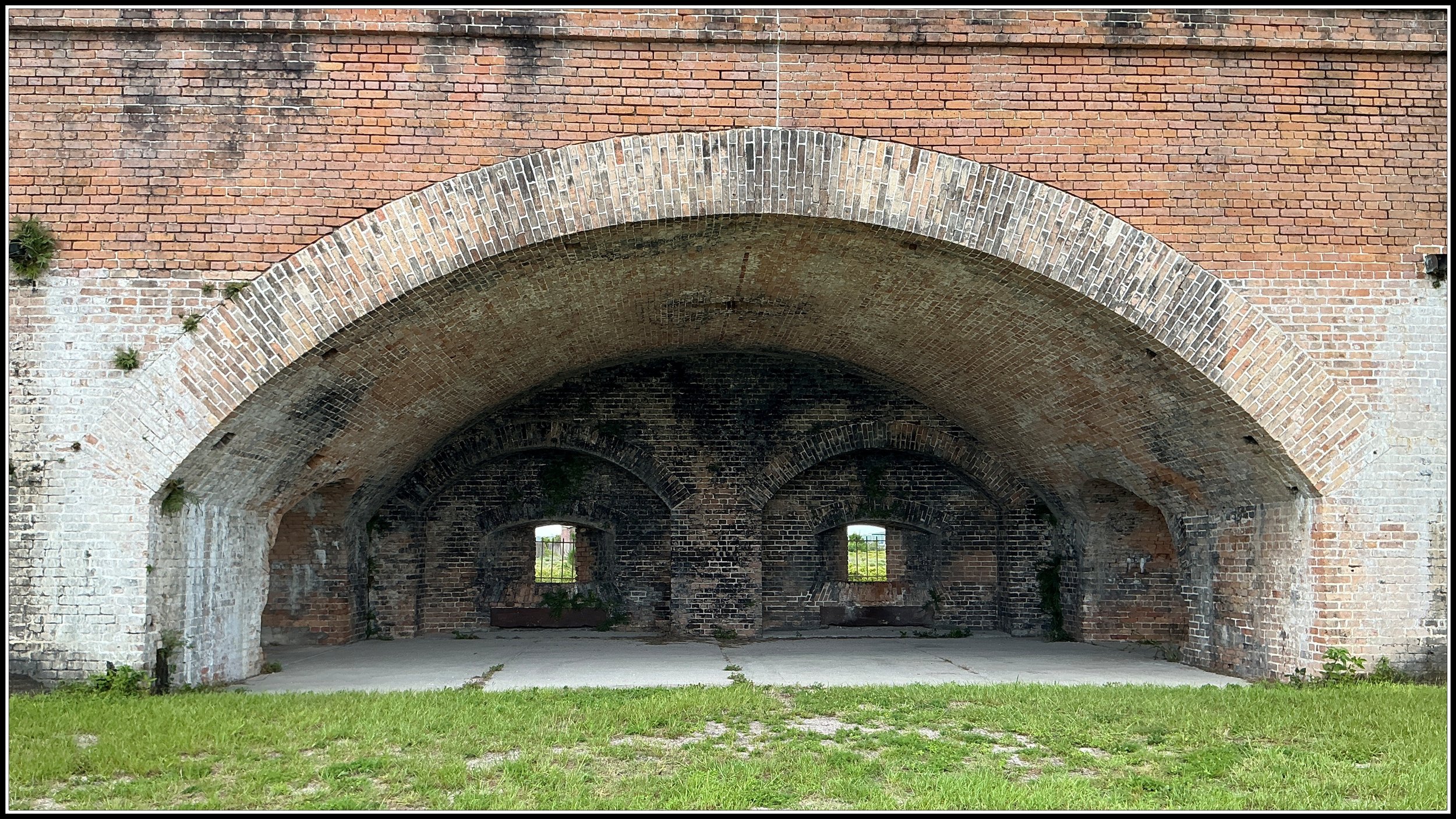
This United States Army fort was built in the 1800s to help defend the Gulf Coast from overseas threats. Pensacola had long been regarded by European powers as a strategic gateway to North America for colonization.
Project #9 - Fort Pickens
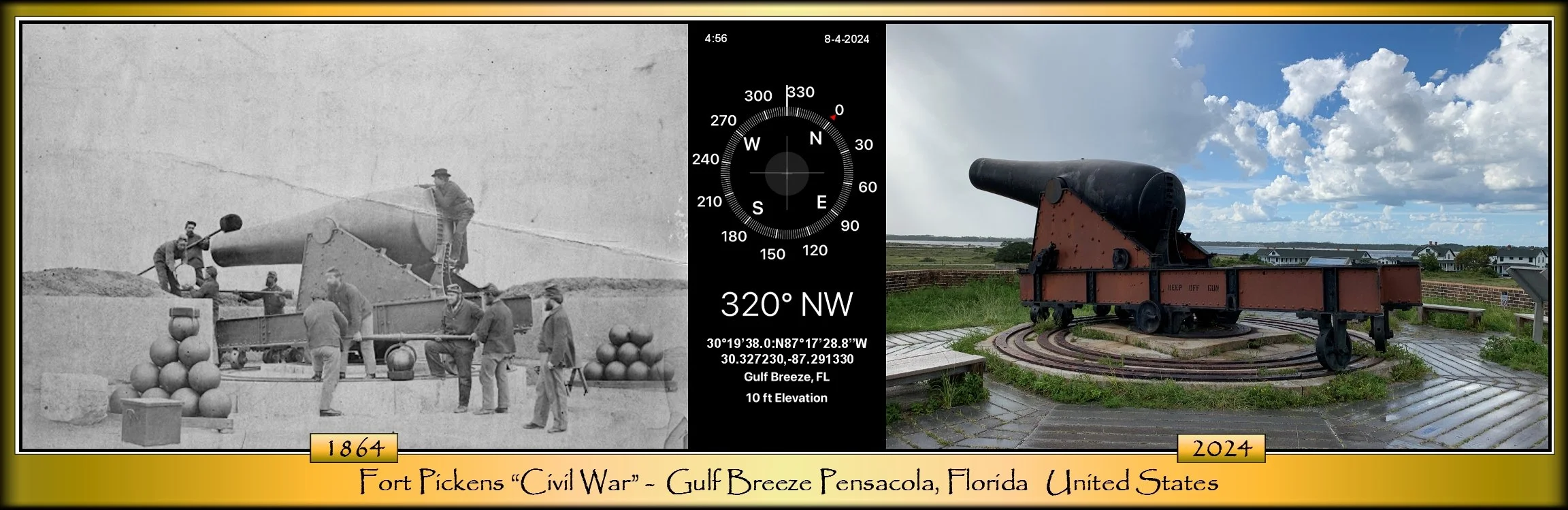
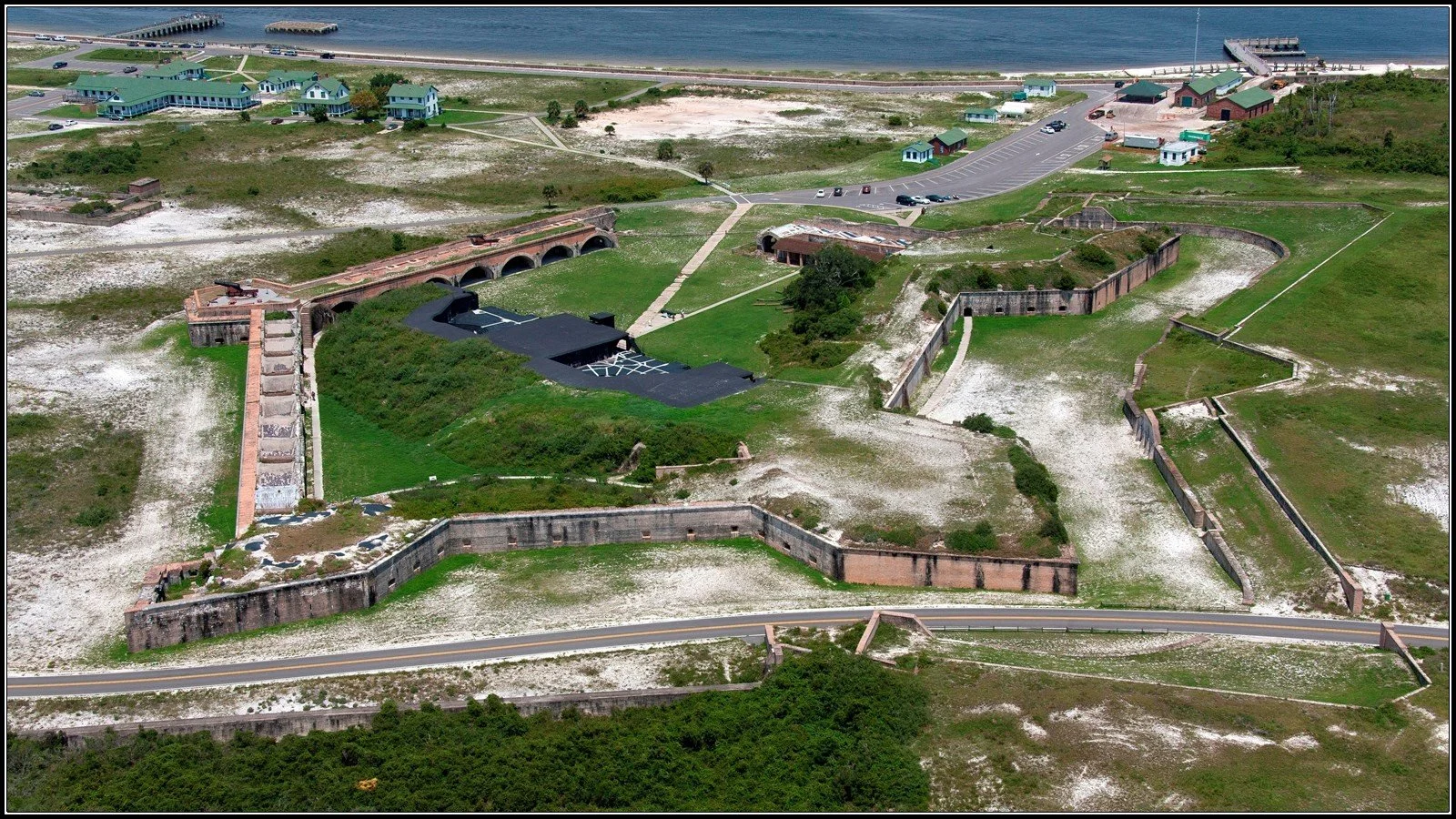
Fort Pickens was named after Revolutionary War hero General Andrew Pickens. For more than a century, the fort guarded the entrance to Pensacola Bay Harbor against foreign invasion. Designed to accommodate more than 200 cannons, construction began in 1829 and was completed in 1834. Built in the shape of a pentagon, the fort was designed to withstand attacks from any of its five sides.
During the construction of the fort, there was a significant shortage of skilled laborers in the area. As a result, the government authorized the use of 200 enslaved African American masons, carpenters, and laborers. Working in intense heat, high humidity, and conditions that exposed them to disease, these individuals endured harsh circumstances. Many were also employed in the construction of other forts during the same period.
During the War of 1812, British forces exposed vulnerabilities along America's shores. Fort Pickens, with its four-foot-thick walls, was built to withstand cannonballs fired from wooden ships. The use of brick-and-mortar fortifications helped secure U.S. independence.
Although Fort Pickens was built to defend against foreign invasion, it saw combat during the American Civil War. In October 1861, General Braxton Bragg led a land assault against Union forces encamped outside the fort. Confederate troops abandoned Pensacola in May 1862, and Fort Pickens remained under Union control for the remainder of the war. The fort saw no further combat after that time.
After the Civil War, the U.S. government focused its military efforts on campaigns against Native peoples in the American West, forcing many from their ancestral lands. Following his surrender in 1886, the Apache leader Geronimo and 15 fellow warriors were imprisoned at Fort Pickens, where they remained until 1888.
Fun Nuggets
The fort has massive storage capacity, including three permanent gunpowder magazine rooms. Soldiers entering these areas had to adhere to the “no spark rule,” which required wearing heavy socks over their boots to prevent sparks.
Bastion D sustained massive damage in 1899 when a fire reached the powder room holding 8,000 pounds of powder. The explosion killed one soldier, destroyed the bastion, and heavily damaged the surrounding walls. The force was so great that bricks from the structure landed across the bay at Fort Barrancas, more than 1.5 miles away. The missing walls are still visible today.