
Project #21 - Dufferin Gate
This historic entrance to the Canadian National Exhibition is best known as for its parabolic arch and has existed in three distinct forms over the years.
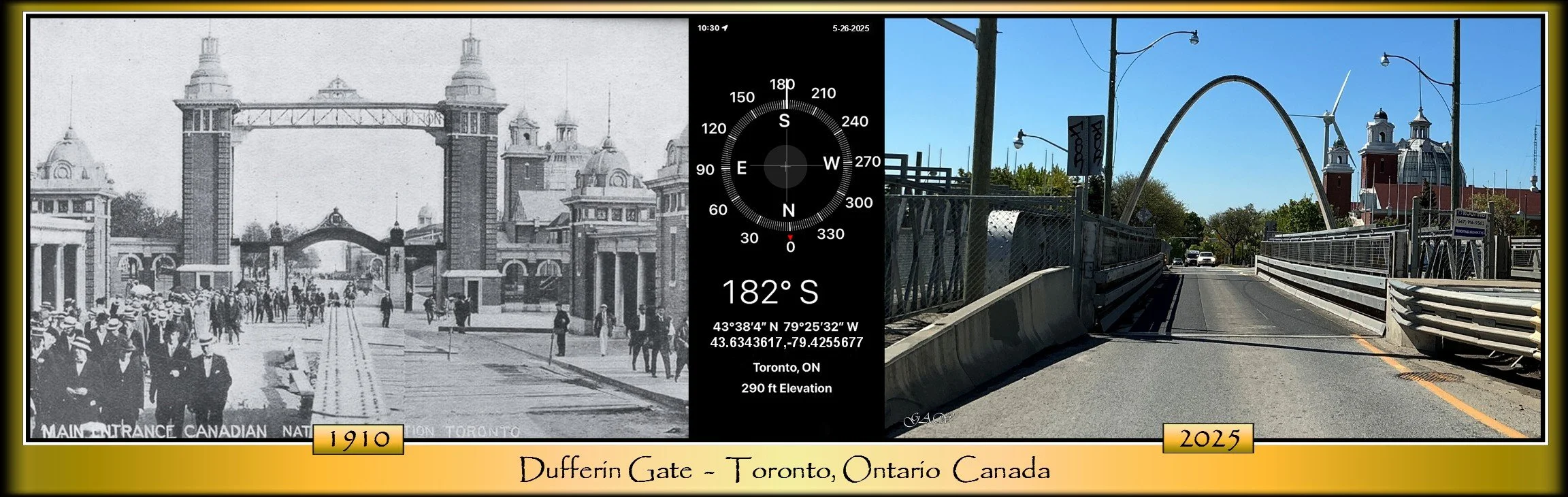
The original was a simple wooden gate that was built over a dirt road in the late 1800s, this was the formal entrance to the Canadian National Exhibition (CNE) grounds, the fair has evolved from a traveling agricultural show to exciting and sometimes bizarre exhibits at the fair.
For seventeen years, the space in front of the wooden gate was used as a gathering area for visitors preparing to enter and experience the annual exhibitions.
In 1910, the original wooden entrance was demolished and replaced with a new Beaux-Arts style arch designed by architect George W. Gouinlock. The grand structure served as an ornate main gateway to the grounds of the Canadian National Exhibition, helping channel large crowds entering via nearby streetcar and railway access points. It remained the primary entrance until 1927, when the Princes' Gates were constructed on the eastern side of the grounds.
For the third time, the original gate structure was demolished in 1958 to make way for the construction of the Gardiner Expressway. In 1959, a new entrance arch was built slightly south of the original location. This modernist, space-age parabolic arch reflected mid-20th-century design trends and replaced the earlier Beaux-Arts gateway as part of the evolving entrance to the grounds of the Canadian National
Fun Nuggest:
Although it bears a striking resemblance to Eero Saarinen’s famous Gateway Arch in St. Louis, Missouri, the modern entrance at the Canadian National Exhibition—known as the Dufferin Gates—was actually completed first. The redesigned arch was built in 1959, reflecting mid-century modern architectural trends and replacing earlier entrance structures that had occupied the site.
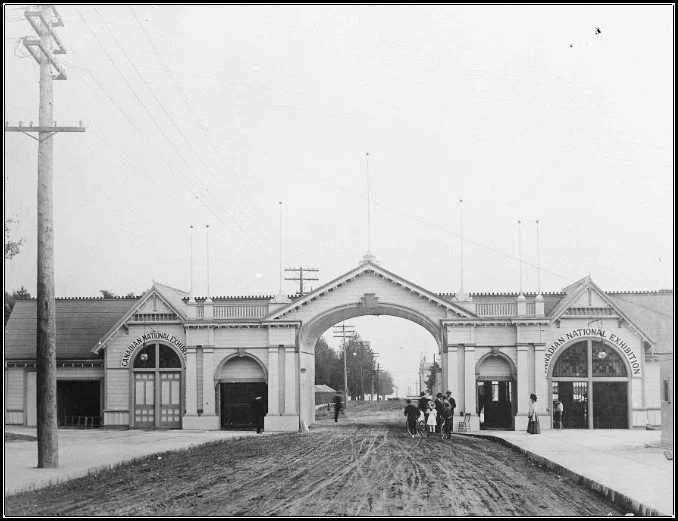
Original wooden gate
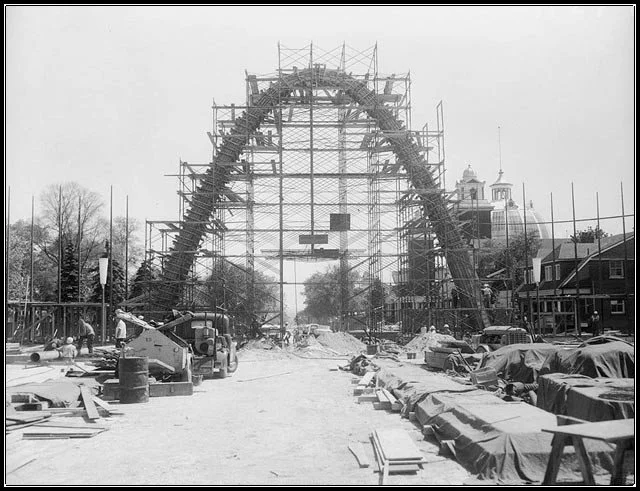
1959 gate under construction
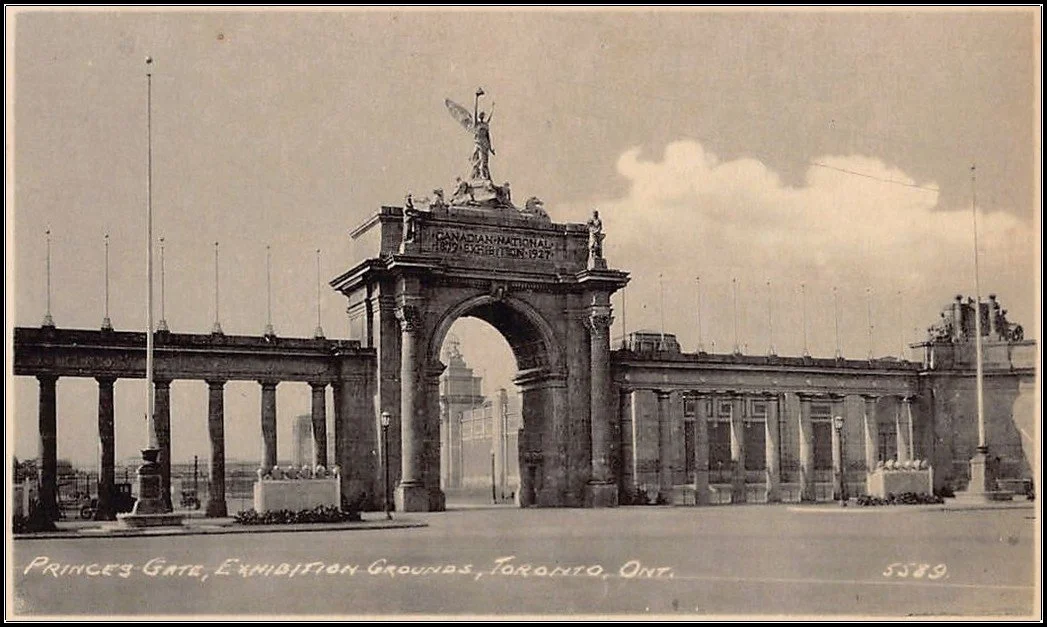
Princes gate, the new main gate after 1927