Project #25 - Blue Walter Bridge
Today, Michigan has four bridges connecting the state to Canada. Before these international crossings were built, ferries provided an important link for travelers and commerce between Michigan and Canada.
Ambassador - Detroit, MI to Windsor, ON (1929)
Blue Water - Port Huron, MI to Sarnia, ON (1938)
Sault Ste. Marie - Sault Ste. Marie, MI to Sault Ste. Marie, ON (1962)
Gordie Howe - Detroit, MI to Windsor, ON (2026)
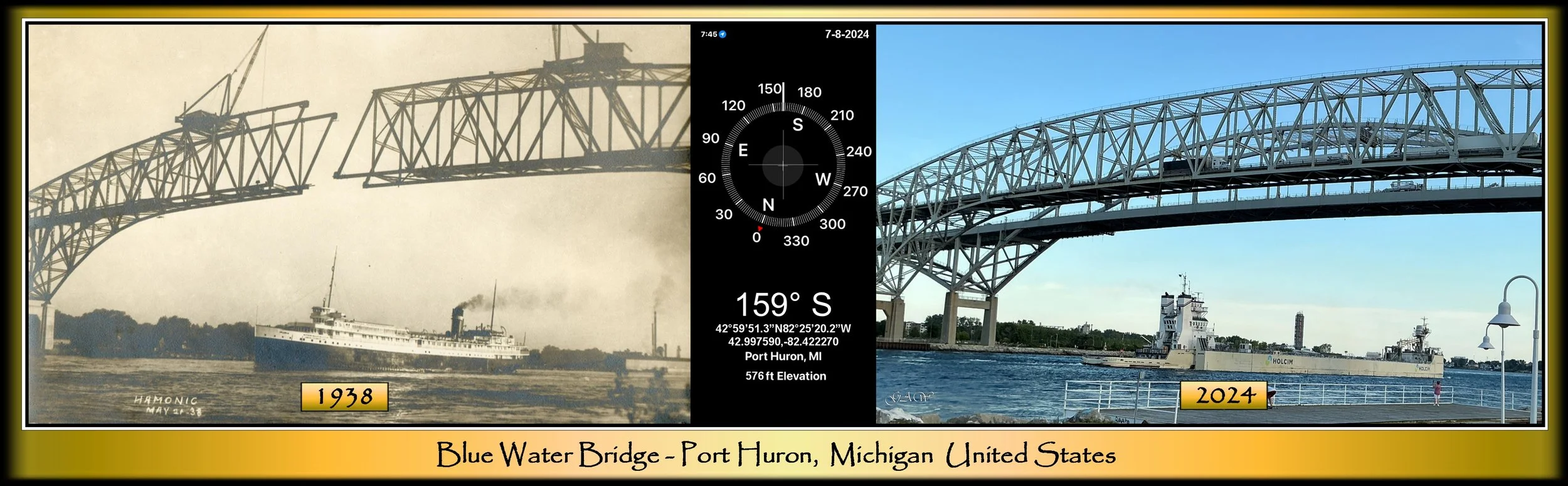
The Blue Water Bridge is one of the most important international crossings between the United States and Canada. Spanning the St. Clair River, it connects Port Huron with Point Edward, linking Michigan to Canada.
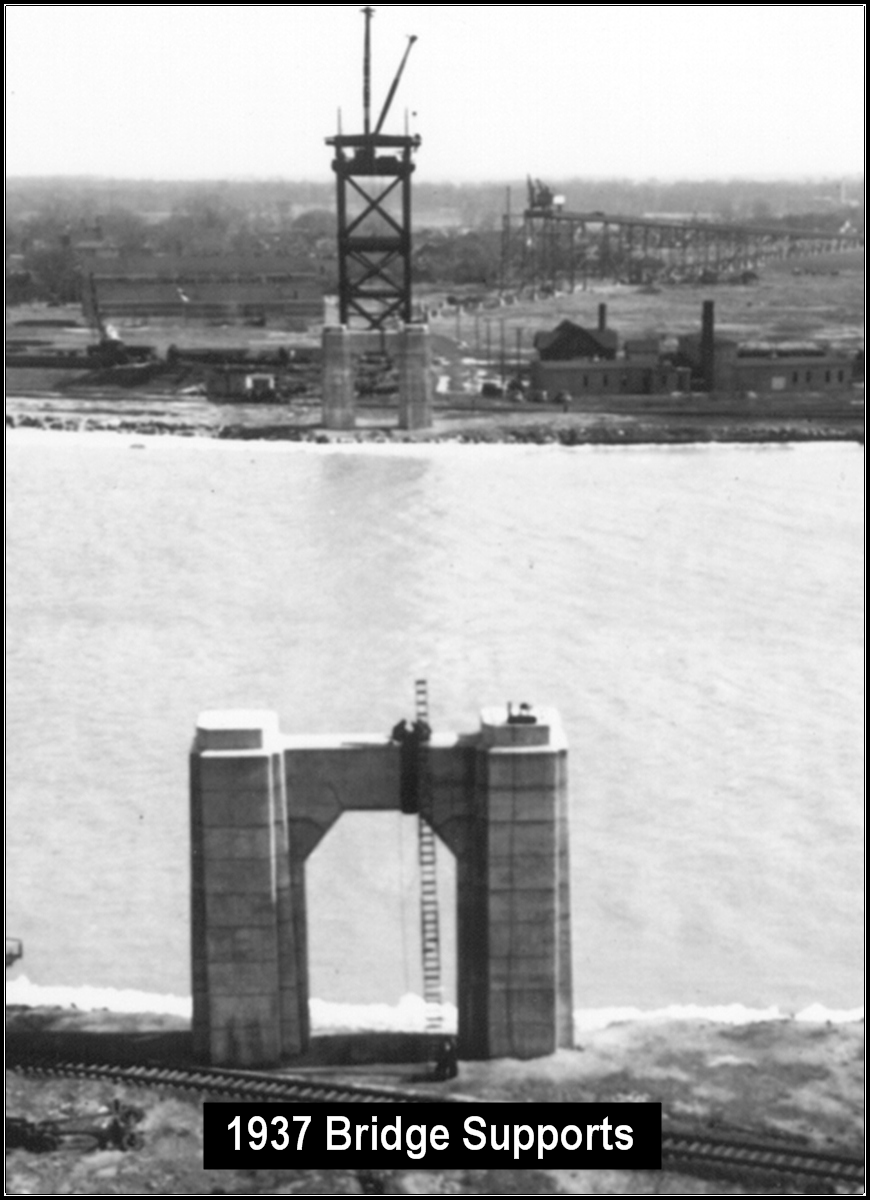
Early planning started with the idea for a permanent bridge across the St. Clair River dates back to the 1920s. Before the bridge, travelers crossed by ferry, which became increasingly congested as automobile and commercial truck traffic grew. Plans were delayed during the Great Depression.
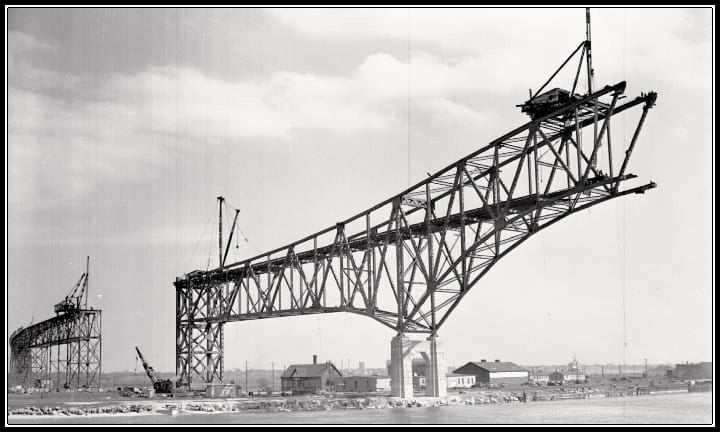
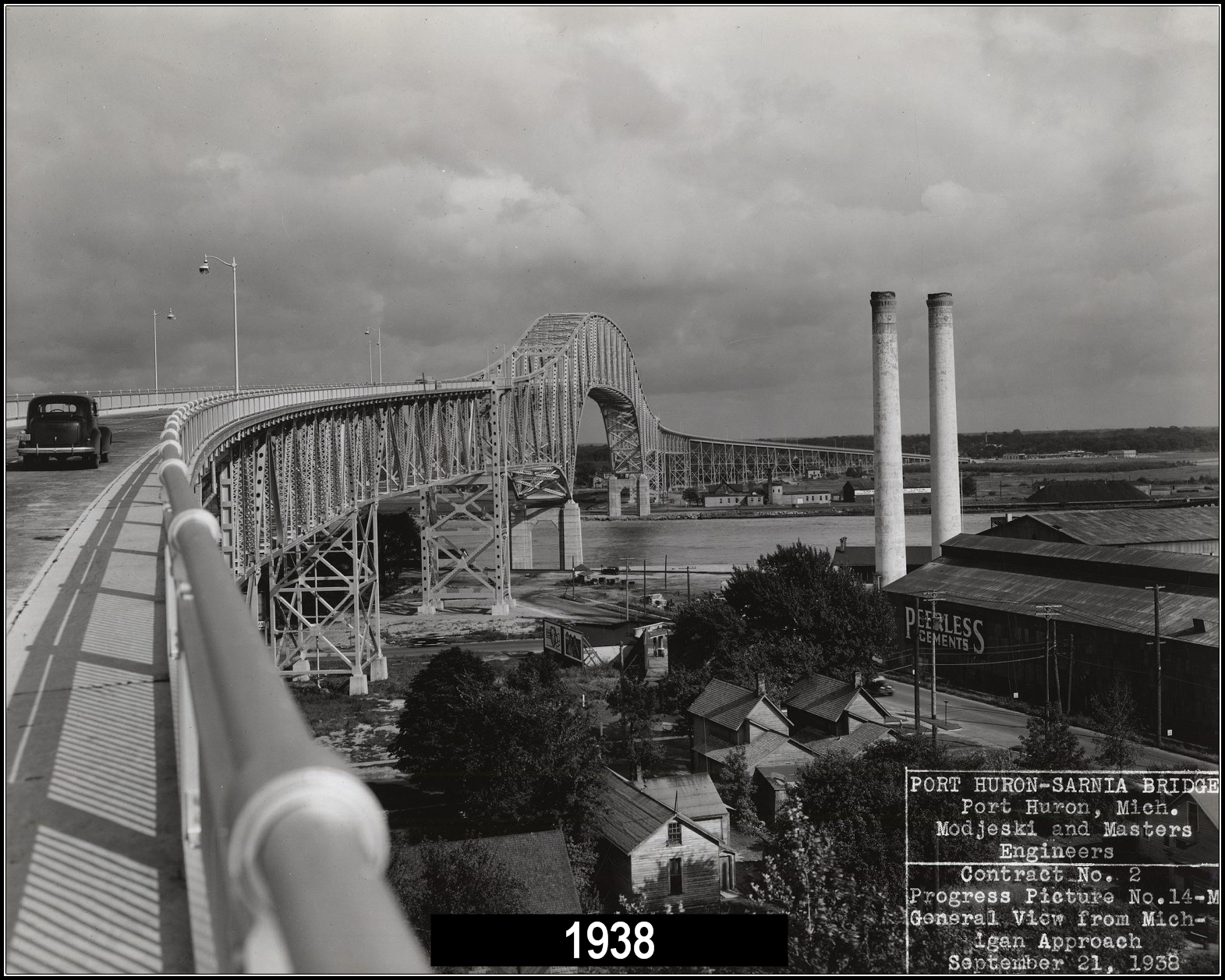
Building this bridge was a joint effort by the American Bridge Company of New York, and the Hamilton Bridge Company of Ontario. The original bridge is an arch cantilever bridge, which was designed to not only support large amounts of traffic, but also to have an aesthetic arching look
The original structure opened to traffic on October 10, 1938, with three traffic lanes, one in each direction and at the time, it was celebrated as one of North America's most modern international bridges and became a vital transportation link for both passenger vehicles and commercial freight.
After World War II a large Postwar growth of automobile ownership and cross-border trade increased dramatically. The bridge became an essential gateway between the industrial Midwest and Ontario, carrying growing numbers of tourists, commuters, and freight trucks.
When the original construction bonds were paid off in the early 1960s, tolls on the U.S. side were briefly eliminated. However, rising maintenance costs and plans for future improvements led Michigan to reinstate tolls in 1971 after receiving congressional authorization.
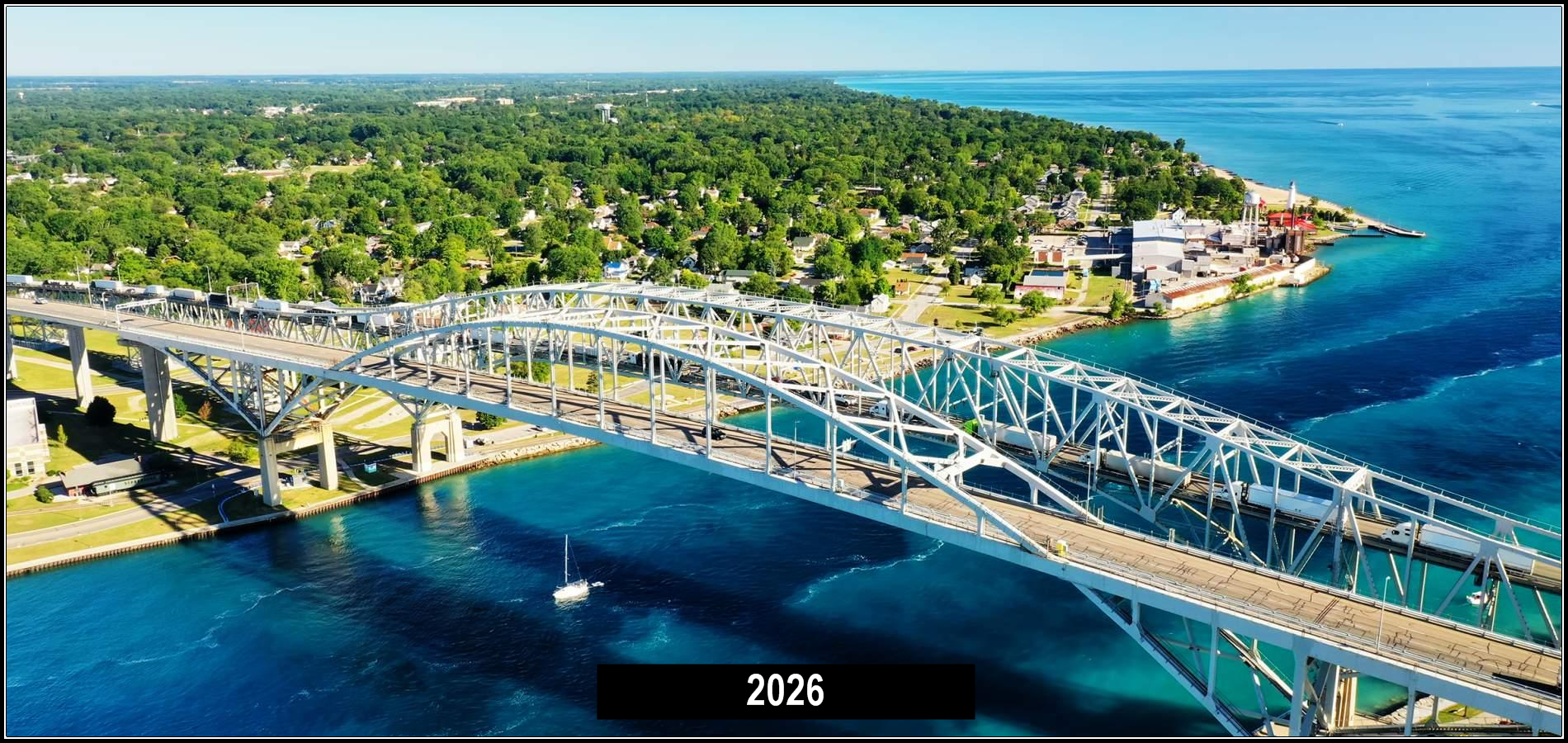
By the 1980s, the original bridge had become one of the busiest border crossings in North America and Traffic congestion prompted plans for a second bridge, However, instead of demolishing the old bridge, a new one was built in 1997 beside the old bridge, to support eastbound traffic.
Construction of the new span began in 1995, and it opened in July 1997. During renovation of the original bridge, both directions temporarily used the new span, the project was considered an enormous success and won awards from the American Society of Civil Engineers,
The original 1938 bridge became the westbound span (toward the U.S.).The new 1997 bridge became the eastbound span (toward Canada).
Cost to build: the original in 1938 was $3.6 million and the new one included renovating of the original one was, $62.6 million dollars. (Michigan Department of Transportation)