
Project # 26 - Old Louisiana State Capitol
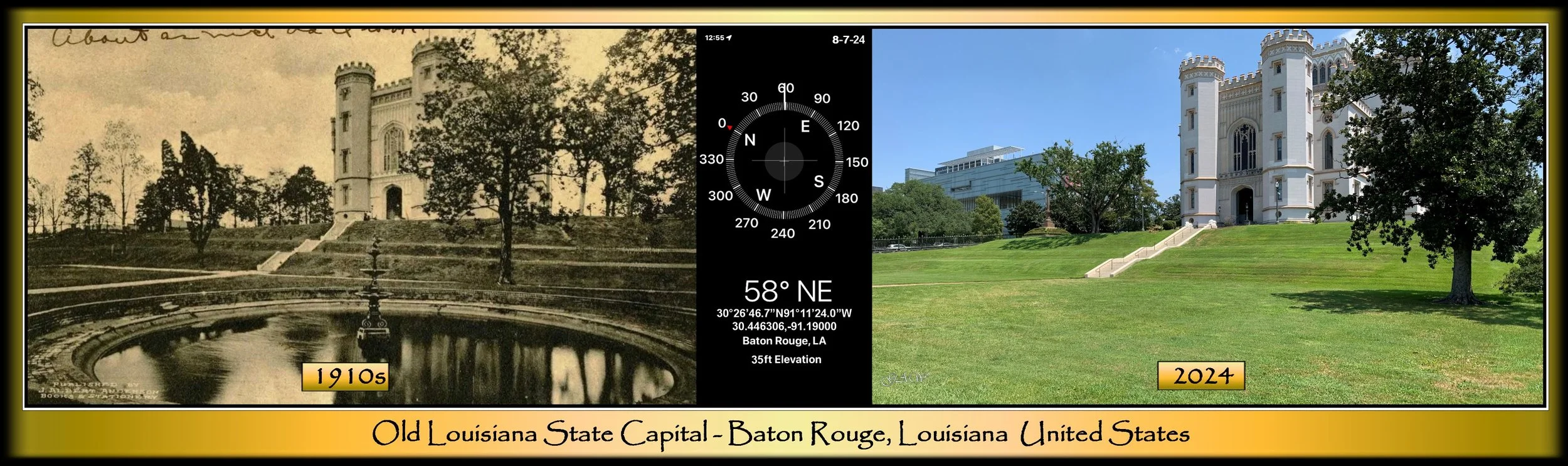
In 1845, Baton Rouge was selected as the capital of Louisiana. State leaders, concerned about the concentration of political and economic power in New Orleans, required that the state capital be located at least 60 miles from the city. In 1847, construction began on the new state capitol in Baton Rouge. The building was located on high ground along the Mississippi River, on a natural levee that helped protect it from seasonal flooding. The name “Baton Rouge,” meaning “Red Stick” in French, is traditionally associated with a red pole or marker that Native Americans are said to have used to designate a meeting or boundary site. French explorers later referred to the area as “le bâton rouge,” giving the city its name.
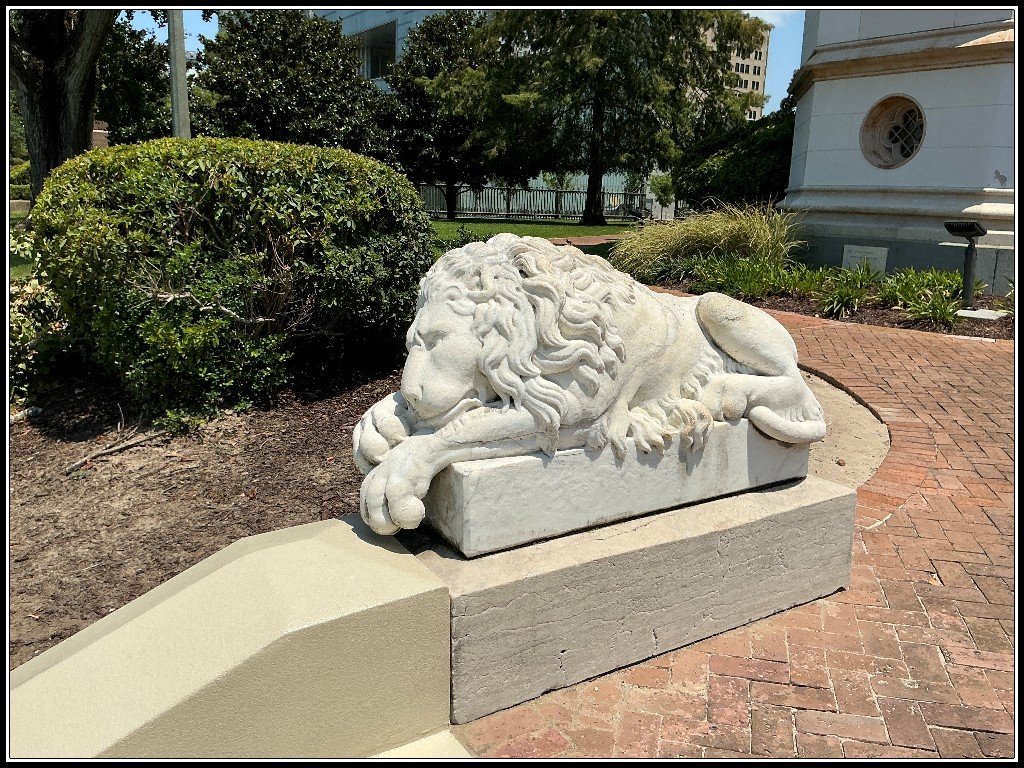
Two white marble lion statues guard the entrance to the Old State Capitol. Dating from the 1850s, the lions originally stood outside the St. Louis Hotel in New Orleans before being moved to Baton Rouge. One lion is shown sleeping while the other remains alert, symbolically guarding the entrance to Louisiana’s historic statehouse.
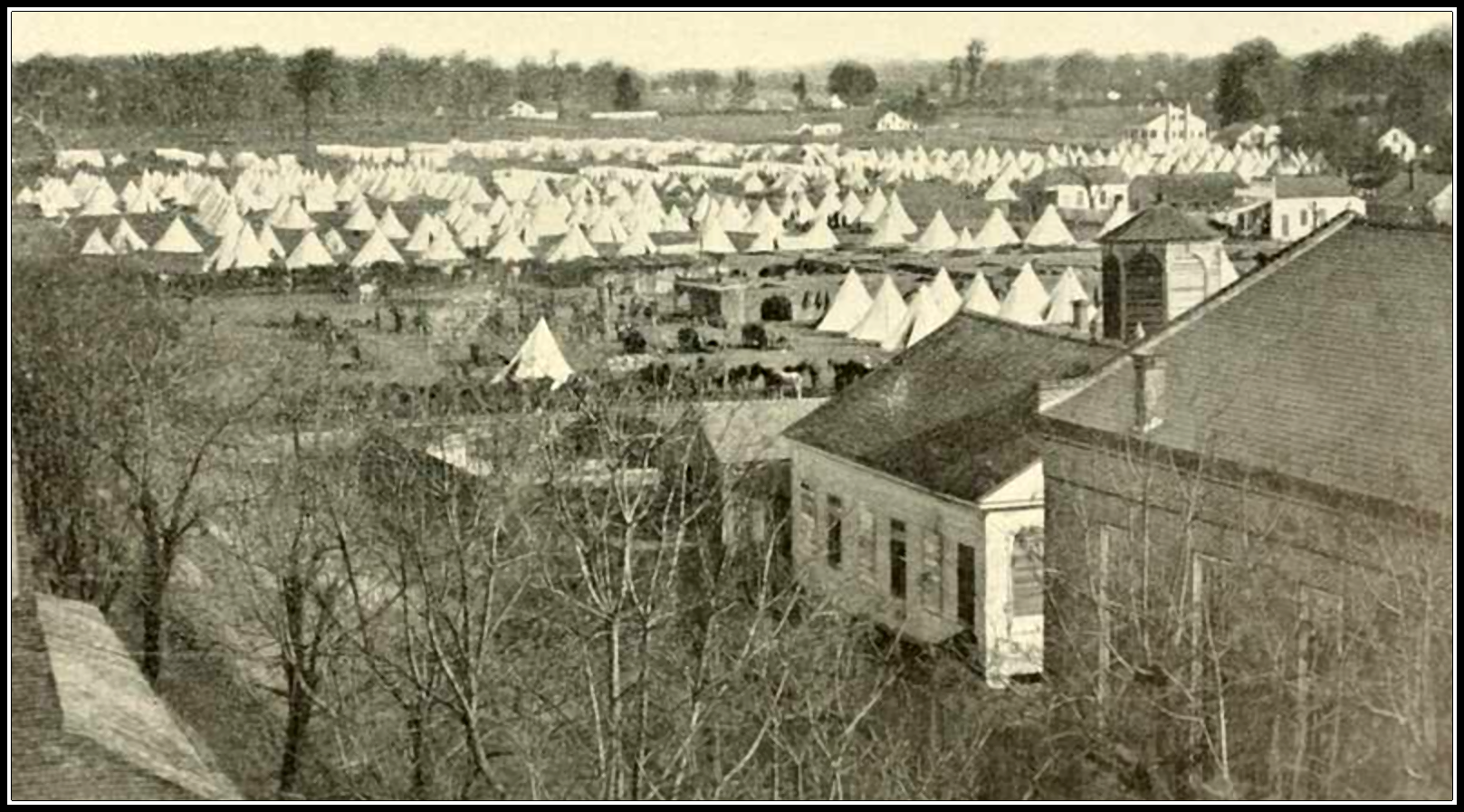
In late July 1862, Union Camp Banks in Baton Rouge was occupied by the 7th Vermont Infantry, 21st Indiana Infantry, and Nims' Battery of the 2nd Massachusetts Light Artillery.
On August 5, 1862, Confederate forces under Major General John C. Breckinridge launched a surprise attack on Union-held Baton Rouge. The fighting reached the Union encampments, temporarily turning Camp Banks into a battlefield. Confederate troops entered some of the Union camps, where tents and equipment were destroyed or burned, while the Union regiments rallied and fought back.
The Battle of Baton Rouge lasted several hours and ended with the Confederates withdrawing. The Union retained control of Baton Rouge.
Fun Nugget’s
Louisiana is the only U.S. state that uses parishes instead of counties. The state has 64 parishes, which serve as the equivalent of counties in other states. The parish system has roots in Louisiana’s French and Spanish colonial history, when parishes served as both religious and governmental divisions.
Louisiana is the only U.S. state whose legal system is based primarily on civil law rather than the English common-law tradition. Louisiana’s civil-law tradition developed from French and Spanish law and was influenced significantly by the Napoleonic Code. However, Louisiana's legal system also incorporates elements of common law, so saying that it simply “uses the Napoleonic Code instead of English common law” is an oversimplification.
In 1861, delegates met at the Old State Capitol and voted to secede from the United States. On January 26, 1861, the convention voted 113–17 for secession. Louisiana declared itself the “Sovereign and Independent Commonwealth of Louisiana” and remained independent for approximately two months before joining the Confederate States of America on March 21, 1861.
During the Civil War, Union forces occupied Baton Rouge and used the Old State Capitol as a command post, prison, and garrison for African-American troops. In December 1862, while Union troops occupied the building, a fire that began in a cooking stove gutted the interior, leaving the exterior walls standing. Some historical accounts state that the building caught fire twice during the Union occupation, although the official Old State Capitol history describes the cause of the fire as uncertain.
The Old State Capitol is associated with one of Baton Rouge’s best-known ghost stories: Sarah Morgan Dawson. Sarah Morgan was a Civil War-era diarist whose family was connected to the property. The museum's “Ghost of the Castle” presentation tells the history of the building through Sarah Morgan's perspective and presents her as its legendary ghost. The claim that her family donated the land appears in local tourism and museum-related accounts, although the documented history is more complicated: the city of Baton Rouge purchased the property from Judge Thomas Gibbs Morgan and contributed $20,000 toward the project.
Louisiana's Old State Capitol, a Gothic architectural treasure, stands high on a bluff overlooking the Mississippi River. The 176-year-old statehouse has withstood war, fire, scandal, bitter debate, abandonment and an occasional fistfight. Today, the building stands as a testament to bold, inspired leadership and active citizenship.